
Walk-In Wardrobe Design: Planning the Perfect Robe

14 May 2024 · 4 min read
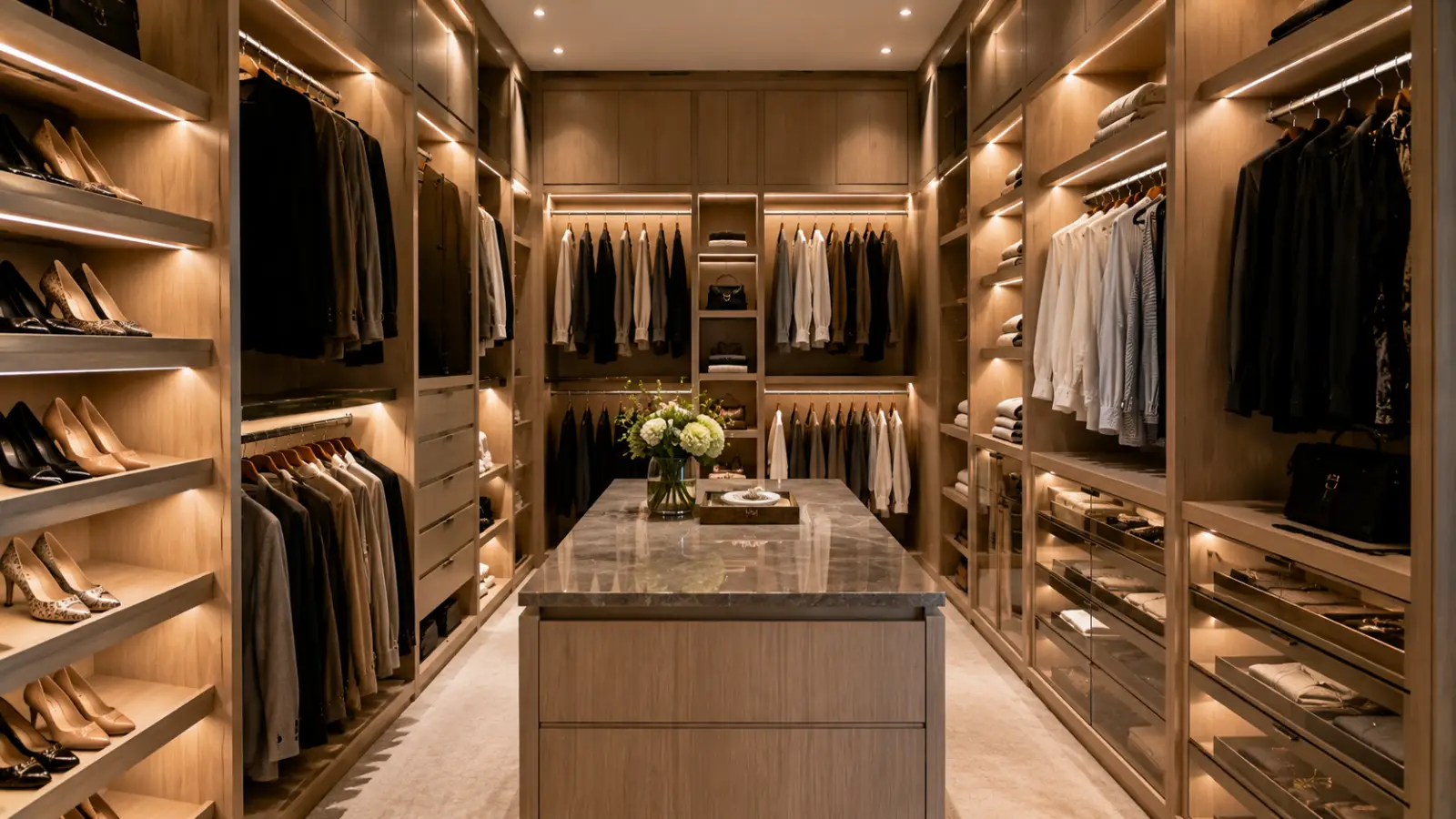
A walk-in robe is one of those things people dream about for years, then rush in the final week of a renovation. I've built a fair few of them here in Gisborne, and the good ones all share the same secret: they're planned around how you actually get dressed each morning, not around a pretty picture. Get the measurements right and a modest space can hold far more than you'd expect.
Start with zoning, not shelving
Before I draw a single shelf, I like to walk a room with the homeowner and split it into zones. Long hang for dresses and coats, short hang (doubled up) for shirts and trousers, drawers for the fold-and-stack items, and open shelves for the things you grab on the way out.
A rough working width to aim for: each person needs roughly 1.2 to 1.5 metres of combined hanging rail to live comfortably without crushing everything. Couples sharing a robe should plan his-and-hers zones from the start, even if it's just a clear line down the middle. It saves a lot of negotiating later.
Hanging heights that actually work
This is where most off-the-shelf wardrobes fall down. The numbers worth knowing:
- Long hang (dresses, coats): allow about 1500 mm of clear drop under the rail.
- Short hang (shirts, folded trousers): around 1000 mm, which lets you stack two rails in the same height as one long-hang section and roughly double your capacity.
- Rail height for a top rail sits comfortably around 1900 to 2000 mm so most people can still reach it.
- Keep at least 50 to 60 mm of clearance behind the rail so hangers don't scuff the back panel.
The trick is mixing these. A typical 2.4 metre wall might run a long-hang bay at one end and a double short-hang stack across the rest, with drawers tucked underneath.
Drawers, shelves, or both
My honest answer is usually both, but lean into drawers more than people first think. Open shelves look lovely in showrooms and gather dust in real Gisborne homes, especially with our coastal air carrying a bit of moisture and salt.
- Drawers (ideally soft-close, 450 to 500 mm deep) are best for socks, underwear, knitwear and anything you'd rather not see.
- Adjustable shelves suit handbags, folded denim and storage boxes. Keep them adjustable, because what you store changes over the years.
- A pull-out for jewellery or watches with a felt liner is a small touch that gets used every day.
If you only splurge on one upgrade, make it drawers over shelves. They're tidier, they age better, and you'll use them daily.
Shoes, accessories and the awkward bits
Shoes need more room than people allow. A single pair of women's shoes wants about 150 to 200 mm of shelf depth; boots and men's shoes closer to 300 mm. Angled shoe shelves with a small lip show the toes and save space, while a flat bottom shelf handles boots and gumboots, which most Gisborne households own at least one muddy pair of.
For accessories, build in:
- Slide-out belt and tie racks rather than hooks that tangle.
- A shallow valet rod near the entrance for laying out tomorrow's outfit.
- A mirror, full length, ideally angled or lit, near natural light if the room allows.
Lighting and a dressing island
Lighting is the upgrade that quietly transforms a robe. Natural colour matching matters when you're choosing an outfit, so I aim for warm-white LED strips under shelves and along rails, plus a good ceiling light. Strip lighting tucked behind a front rebate throws light onto clothes, not into your eyes.
If the room is 2.6 metres wide or more, a dressing island becomes possible. Allow at least 900 mm to 1000 mm of clear floor on each side so drawers open and you can pass comfortably. An island gives you a fold-down surface, a top for a jewellery tray, and another bank of drawers, all in the dead centre that would otherwise be wasted. In tighter rooms, a slim 600 mm peninsula bench off one wall does a similar job.
We design, build and install our robes here locally, so every height and bay gets cut to suit the actual room and the people using it, and the workmanship carries our 5-year warranty.
The best advice I can give is to count your own clothes before you plan: tally your long-hang items, your folded stacks, your shoes. A robe built to your real wardrobe beats a generic one every time. Measure twice, hang once, and you'll enjoy it every single morning.
Sukhman Singh
Founder & Cabinet Maker, Flow Joinery
Sukhman designs and builds bespoke kitchens, wardrobes and cabinetry across Gisborne. Read more →
Reviews
No reviews yet — be the first to share your thoughts.
Sign in or create an account to leave a review.