
Built-In vs Freestanding Storage: Which Is Right for You?

12 November 2024 · 4 min read
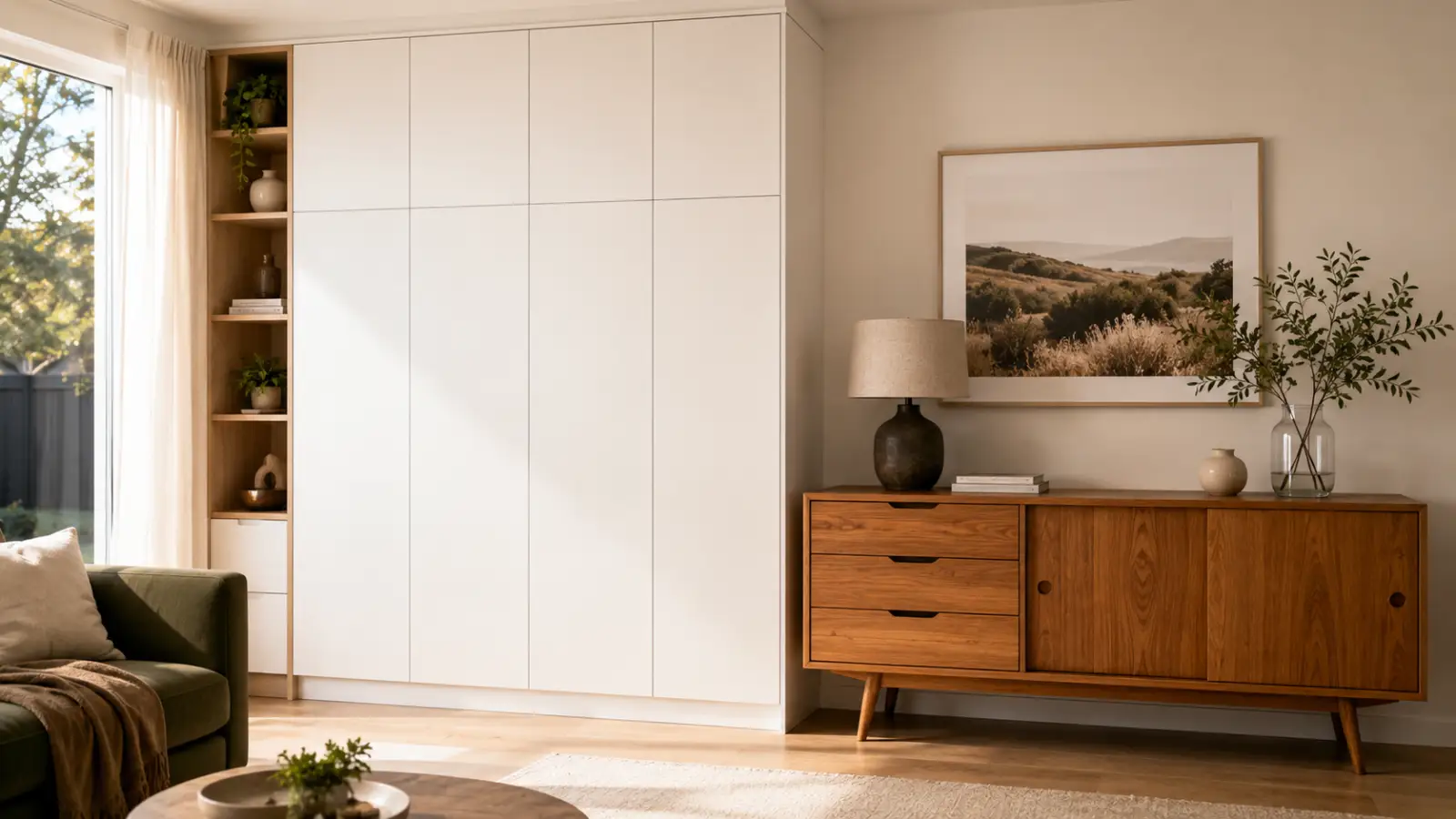
Almost every home I walk into in Gisborne has the same quiet problem: not enough storage in the right places, and too much furniture fighting for floor space. The fix is usually a mix of built-in joinery and freestanding pieces, not one or the other. Knowing where each one earns its keep is the difference between a tidy home and a cluttered one.
What we actually mean by each
Built-in storage is joinery designed and fixed to your home: wardrobes framed into a wall, a window seat with drawers under it, a laundry run, an entertainment unit scribed to the skirting. It's measured for your space and it stays when you sell.
Freestanding storage is furniture that stands on its own: a tallboy, a bookshelf, a sideboard, a standalone pantry cupboard. It arrives finished, it moves when you move, and it's ready the day it lands.
Both have a place. The trick is matching the right one to the right job.
Space efficiency: built-in usually wins
This is where built-in pulls ahead, and it's not close in tight rooms. Freestanding furniture leaves gaps. There's a 30-50mm void each side so it doesn't scuff the wall, dead space on top collecting dust, and skirting boards that stop it sitting flush.
Built-in joinery uses every millimetre. We can run cabinetry floor to ceiling, scribe it tight to walls that are never quite square (and in older Gisborne villas, they rarely are), and turn awkward spots into useful storage:
- The dead corner under a staircase
- A shallow 200mm recess beside a chimney breast
- The full height above a wardrobe hanging rail
- A window seat that hides bedding or kids' toys
In a small bedroom or a narrow hallway, a built-in can give you noticeably more usable storage than a freestanding unit in the same footprint.
If you're short on floor space, built-in joinery almost always stores more in less room, because it's designed around your walls instead of working against them.
Resale, flexibility, and who's moving
Here's the honest trade-off. Built-in joinery generally adds to a home's appeal and value. A well-finished wardrobe wall, a proper scullery, or a smart laundry reads as quality to a buyer, and it's one less thing they have to sort out.
Freestanding furniture wins on flexibility. If you're renting, expecting to move within a few years, or you like rearranging rooms with the seasons, freestanding makes sense. You take it with you, and you're not altering a property you don't own.
So a rough rule I give people:
- Staying put 5+ years, and it's your home? Lean built-in for the spaces that matter most.
- Renting or moving soon? Lean freestanding, and save the built-in spend for your forever home.
What about cost?
I'll be straight with you, because nobody likes vague answers on money. Built-in joinery costs more up front than buying a piece of flat-pack or retail furniture. You're paying for custom design, quality materials, and skilled installation, and that's reflected in the price.
But it's not really apples to apples. A flat-pack wardrobe and a custom one designed for your room, finished properly, and built to last decades sit in different leagues. Mid-range solid furniture from a good retailer can actually cost more than people expect, which narrows the gap.
My honest guidance: spend on built-in where it does the heavy lifting day to day (kitchens, wardrobes, laundries, sculleries) and use freestanding for pieces you want to move around or swap out. At our workshop we design, build and install locally, and back the work with a 5-year workmanship warranty, so built-in is genuinely a long-term investment rather than a throwaway.
Deciding room by room
The clearest way to choose is to go through the house and ask what each room needs to do.
Kitchen and scullery: Built-in, almost always. Bench heights, appliance gaps and plumbing have to be exact, and good kitchen joinery is a strong resale point.
Bedrooms: Built-in wardrobes are the single best storage upgrade in most Gisborne homes, especially older ones with shallow or missing wardrobes. A freestanding tallboy can supplement.
Living room: Either works. A built-in media wall looks tidy and hides cables, but a freestanding sideboard gives you freedom to rearrange.
Hallway and entry: Built-in shines here, turning narrow dead space into shoe and coat storage you'd never fit a freestanding unit into.
Home office or kids' rooms: I often suggest freestanding first. These rooms change use fast, and you don't want to commit joinery to a setup that's gone in two years.
There's no single right answer for a whole house. The best homes I see use both deliberately: built-in for the spaces that need to work hard and stay, freestanding for the bits that need to flex.
If you're weighing it up for a particular room, it's worth talking through the actual space before deciding either way.
Sukhman Singh
Founder & Cabinet Maker, Flow Joinery
Sukhman designs and builds bespoke kitchens, wardrobes and cabinetry across Gisborne. Read more →
Reviews
No reviews yet — be the first to share your thoughts.
Sign in or create an account to leave a review.