
What Affects the Cost of Custom Wardrobes?

15 February 2025 · 4 min read
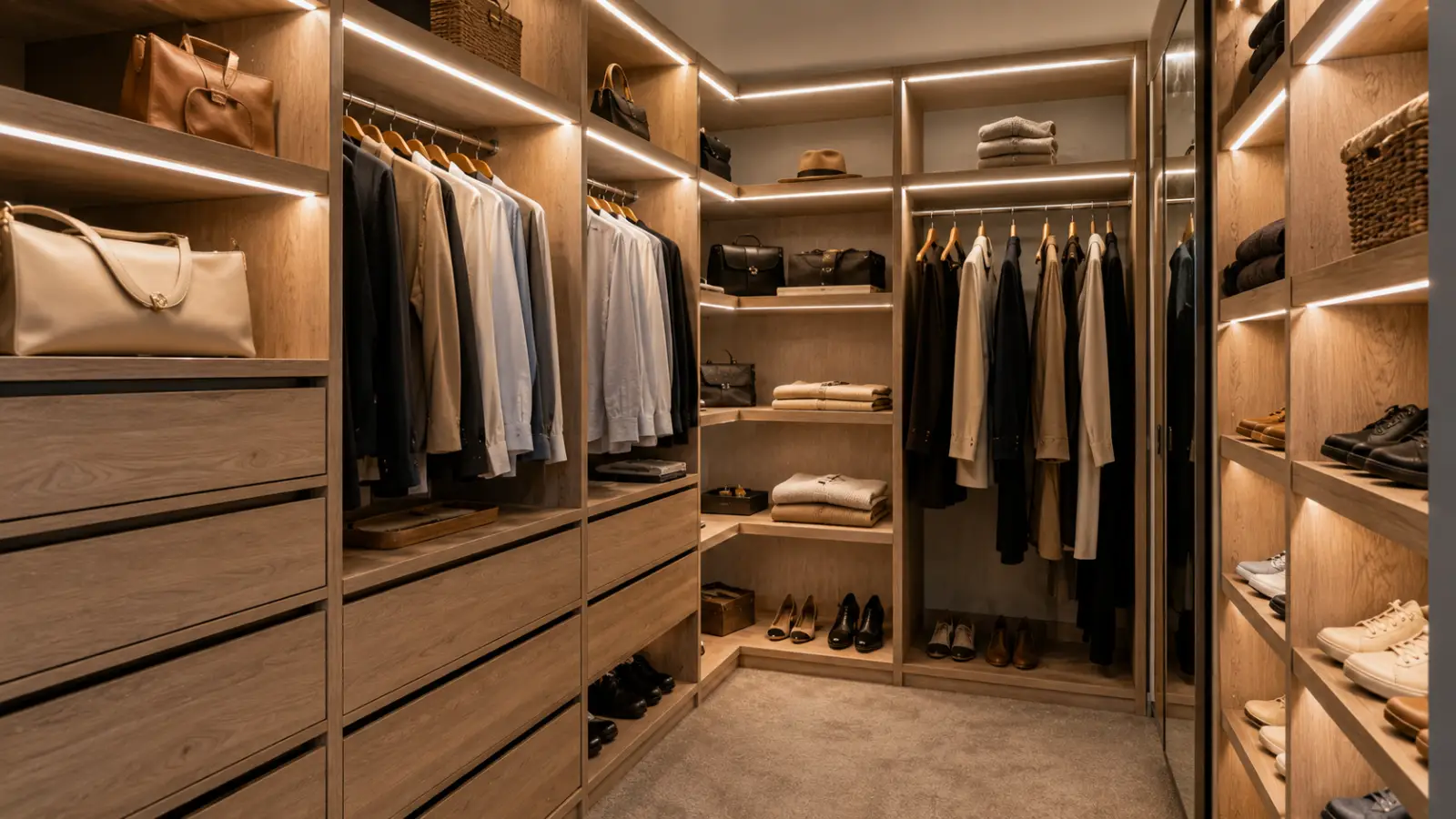
People often ask me why two custom wardrobe quotes can look so different, or why a built-in robe costs more than the flat-pack one they saw online. The honest answer is that a wardrobe is really a series of small decisions, and each one nudges the price up or down. So instead of throwing numbers at you, I'd rather walk you through what actually drives the cost, so you can shape a wardrobe that suits both your home and your budget.
Size and complexity come first
The biggest single factor is simply how much wardrobe you're building. A standard reach-in robe along one wall uses far less material and labour than a full walk-in lined on three sides. More linear metres means more carcasses, more shelving and more time in our workshop.
Complexity matters just as much as size. A straight run of cabinetry is efficient to build. The moment you add corners, angled returns, a sloped ceiling, or you're working around a window or an old chimney breast (common in Gisborne's older villas and bungalows), the build time climbs. Every awkward junction has to be measured, scribed and fitted by hand.
The internal fit-out is where budgets move
This is the part most people underestimate. An empty box with a single hanging rail is cheap. A fully fitted interior is a different thing entirely. The internal fit-out is usually where I see budgets stretch, and it's worth thinking about honestly before you commit.
Things that add cost on the inside:
- Drawers — banks of drawers are labour-intensive and use quality runners, so they cost more than open shelves
- Double hanging versus long hang — splitting space for shirts and jackets adds dividers and rails
- Shelving — adjustable shelves cost a little more than fixed, but earn their keep over time
- Accessories — pull-out trouser racks, jewellery trays, shoe shelves, soft-close baskets and integrated lighting all add up
A good rule of thumb: spend on the fit-out you'll use every day, and keep the rarely-touched zones simple.
You don't need every gadget. Often the smartest wardrobe is mostly hanging and shelving, with one well-placed bank of drawers.
Materials and finish
What the wardrobe is made from has a clear effect on price. Most of our wardrobe interiors are built from quality melamine-faced board, which is durable, easy to clean and comes in a wide range of colours. It's the sensible workhorse for inside a robe.
The doors are where finish choices really show up in the quote. Roughly from most affordable upward:
- Melamine or laminate doors — practical and cost-effective
- Thermo-formed or vinyl-wrapped doors — a step up, good for a painted look without the price of paint
- Spray-painted MDF doors — a beautiful smooth finish, but more labour
- Timber veneer or solid timber detailing — the premium end, with the grain and warmth to match
Mirror doors, glass inserts and feature handles sit on top of those base choices. None of these are right or wrong; it's about where you want to spend.
Hardware quietly sets the feel
Hardware is easy to overlook, but it's what you touch every day. The difference between budget runners and good German soft-close hinges and drawer systems is real, and it shows up in the quote. I'd always rather put solid hardware behind plainer doors than the reverse, because cheap runners are the first thing to fail.
The same goes for hanging rails, lighting and door mechanisms. Sliding doors, for example, need quality tracks to keep running smoothly for years, especially with the moisture swings we get on the coast here.
Install access and the existing space
The last factor is the one nobody thinks about until install day: getting the wardrobe into the room. A ground-floor bedroom with a wide doorway is straightforward. A tight hallway, a narrow staircase or an upstairs room can mean we build in smaller modules, which takes more planning and on-site assembly.
The condition of the existing space matters too. Out-of-square walls, uneven floors and old skirting all need scribing and packing so the finished robe looks like it grew there. That care is part of why we run a single design-build-install model and back our work with a 5-year workmanship warranty: when one team handles the whole job, those fiddly details don't fall through the cracks.
If you're weighing up a wardrobe, start with how you actually live and dress, then build the spec around that. Get those priorities right and the cost tends to look after itself. I'm always happy to talk through options for your space when you're ready.
Sukhman Singh
Founder & Cabinet Maker, Flow Joinery
Sukhman designs and builds bespoke kitchens, wardrobes and cabinetry across Gisborne. Read more →
Reviews
No reviews yet — be the first to share your thoughts.
Sign in or create an account to leave a review.