
DIY vs Hiring a Cabinet Maker: Cost & Quality

2 June 2026 · 4 min read
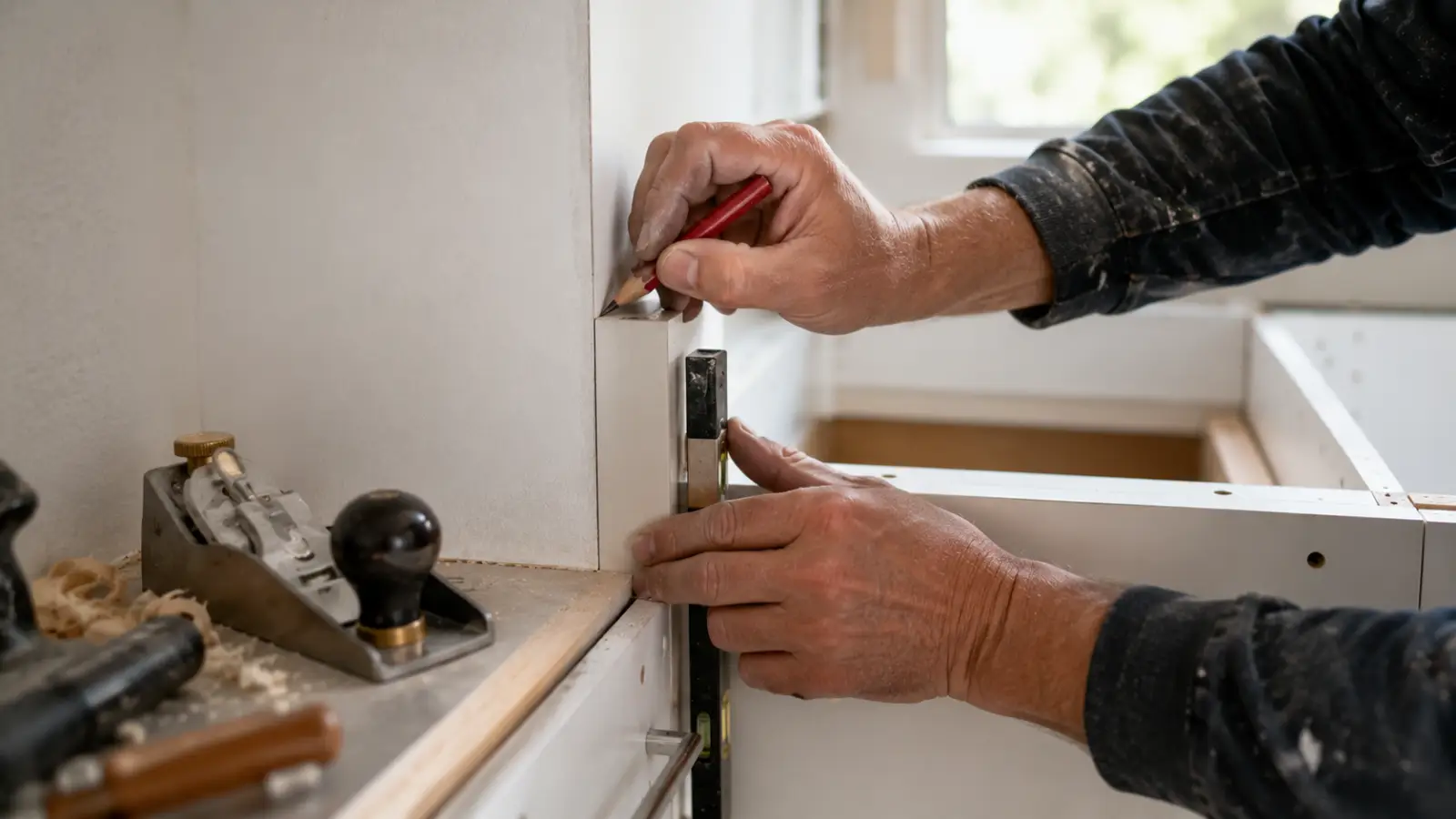
Every few months someone comes into the workshop with a flat-pack kitchen half-built in their garage and a slightly defeated look on their face. They started with the best intentions, and somewhere around the third wonky drawer they realised it was harder than the box promised. So before you commit either way, here's my honest take as a cabinet maker on what DIY actually involves.
What DIY flat-pack really asks of you
Flat-pack gets sold as "anyone can do it," and for a single cabinet, that's fair enough. The trouble starts when you're assembling a whole run and expecting it to line up like a built-in kitchen.
To do it properly you need a fair bit of kit: a good cordless drill, a clamp set, a spirit level (a long one, not the little keyring type), a circular saw or jigsaw for cuts, and ideally a track saw if you want clean edges. You also need patience, a flat floor to work on, and a second pair of hands for the bigger panels.
The real skill isn't screwing the boxes together. It's levelling and scribing the cabinets to walls and floors that are never truly straight, especially in older Gisborne homes where the timber has moved over the decades. Get that wrong and every door and drawer telegraphs it.
Where DIY tends to go wrong
I'm not here to talk anyone out of having a go. But the same handful of problems come up again and again:
- Out-of-square carcasses because they weren't checked diagonally before the back went on
- Benchtops that don't sit flat because the cabinets underneath aren't level to within a millimetre or two
- Doors and drawers that drift out of alignment once the hinges take real-world weight
- Damaged melamine edges from cuts made without the right blade or a guide
- Plumbing and electrical cut-outs in the wrong spot, which is an expensive mistake on a finished panel
The cabinets themselves are rarely what trips people up. It's the fit to your actual walls, floor and services that separates a kitchen that looks built-in from one that looks bolted-on.
The other quiet issue is moisture. Our climate here can be humid, and cheaper flat-pack board doesn't always cope well around the sink and dishwasher. Without proper sealing of cut edges, you can get swelling within a couple of years.
The real cost once you value your time
On paper, DIY flat-pack wins easily. The materials are cheaper and there's no labour line on the invoice. That's genuine, and for a laundry, a garage bench or a rental tidy-up, it can be the right call.
But the full picture is rarely just the box price. Be honest with yourself about:
- Your time — a careful DIY kitchen install is realistically a few weekends, not an afternoon
- Tool hire or purchase if you don't already own the gear
- Wastage from mistakes, off-cuts and the inevitable second trip for parts
- Fixing or redoing work that didn't come out right
I'd put it this way: flat-pack saves you the most when your walls are straight, your design is simple, and your own time is genuinely free. The moment you've got an awkward corner, a stone benchtop, or you'd rather spend your weekends doing literally anything else, the maths shifts.
What a cabinet maker actually adds
When you bring in a maker, you're not just paying for someone to assemble boxes faster. You're paying for the parts that don't fit in a flat-pack box: cabinetry built to your exact dimensions, materials chosen to suit a kitchen rather than a price point, and an install that's been scribed and levelled properly.
At Flow Joinery we run a design-build-install model, so the same people who measure your space build the cabinets and fit them. Nothing gets handed off and lost in translation, and if something needs adjusting down the track, there's a real person to ring. We also back our workmanship with a 5-year warranty, which simply isn't something a flat-pack carton can offer.
You also get options flat-pack can't: drawers sized around your actual pots, a pantry that uses every millimetre of an odd nook, and finishes that hold up to Gisborne's coastal air.
So which should you choose?
Be honest about three things: your skill with tools, how straight your home actually is, and what your weekends are worth to you. If all three line up, flat-pack can be a smart, satisfying project.
If any of them give you pause, especially on a kitchen you'll use every day for the next twenty years, it's worth at least having the conversation before you order. Either way, measure twice and take your time, because the cabinets will outlast the decision.
Sukhman Singh
Founder & Cabinet Maker, Flow Joinery
Sukhman designs and builds bespoke kitchens, wardrobes and cabinetry across Gisborne. Read more →
Reviews
No reviews yet — be the first to share your thoughts.
Sign in or create an account to leave a review.