
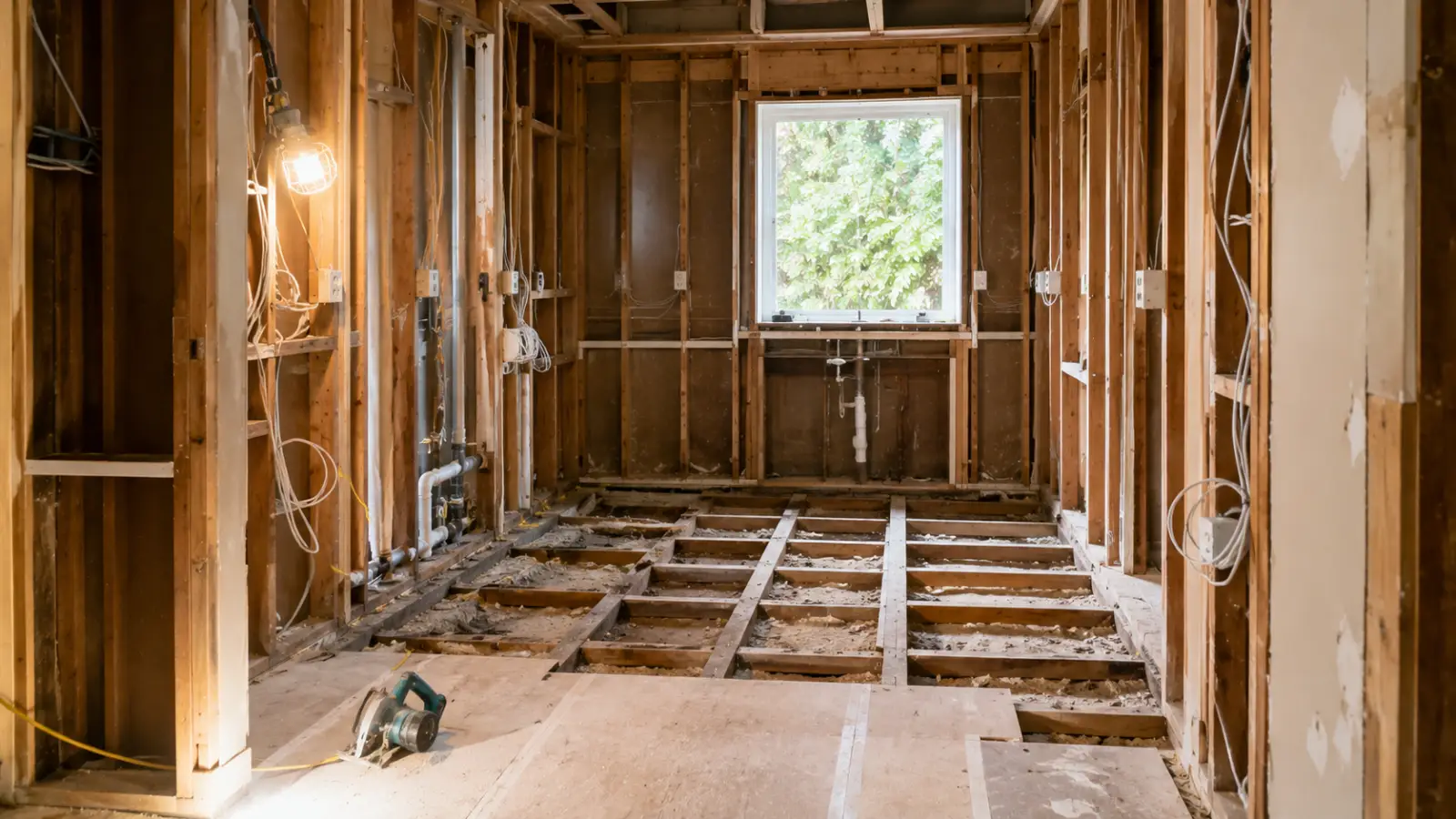
Most renovation blowouts I see aren't because the cabinetry came in over budget. They happen because of the work hiding behind and beneath the cabinets — the bits nobody photographs and nobody quotes for until it's too late. After years of building and installing kitchens across Gisborne, I can usually pick where a budget is going to get stretched before we've even lifted a hammer.
Here's an honest run through the costs people forget, and how to plan for them so your renovation stays on the rails.
The work behind the walls: gib and plastering
When you pull out an old kitchen, you almost always find tired or damaged gib behind it. Old splashback adhesive, patched holes, a wall that was never finished properly because it was hidden anyway.
Once the cabinets are out, that wall needs to be sound before new cabinetry and splashback go back on. That can mean a sheet or two of new gib, stopping, and a coat of paint. None of it is dramatic on its own, but plastering and painting are a separate trade from your cabinetmaker, and they're easy to leave out of a mental budget.
In a lot of older Gisborne homes — especially weatherboard places from the mid-century — we also find walls that aren't plumb or square. That's not a fault, it's just age, but it does add scribing and packing time.
Flooring under and around cabinets
This one surprises people constantly. If your old kitchen had vinyl or tiles that ran only up to the cabinets, your new layout almost never lines up with the old footprint.
Move a run of cabinets 200mm, add an island, or take out a wall, and suddenly there's bare floor where there used to be a cabinet. Now you're patching flooring, or relaying the whole lot.
Budget for flooring as part of the kitchen, not after it. The two decisions are joined at the hip.
A few things worth deciding early:
- Whether new flooring goes under the cabinets or up to them (this affects sequencing and future repairs)
- Whether you're keeping, patching or replacing the existing floor
- How a dishwasher or fridge cavity will sit if the floor height changes
Electrical and plumbing relocations
The minute you move a sink, a hob, or add an island, you're into a sparky and a plumber. Relocating a sink means moving water and waste; an island cooktop or sink can mean running services through a concrete slab, which is real work.
Same with power. New ovens, induction cooktops and some rangehoods need dedicated circuits, and an older Gisborne switchboard sometimes can't take the extra load without an upgrade. Electrical and plumbing relocations are some of the most underestimated costs in any kitchen.
We design around your existing services where it makes sense, precisely to keep these costs down — but if a layout genuinely needs services moved, it's better to know that at the design stage than on install day.
Appliances and the "while we're at it" trap
Two things happen with appliances. First, people upgrade mid-project — a wider fridge, a fancier oven — and forget that a different appliance often means different cabinetry, different cutouts, sometimes a different bench.
Second is the classic "while we're at it." While the kitchen's out, you may as well repaint the whole room, fix that window, sort the lighting. Each one is reasonable. Together they can quietly add a large chunk to your spend.
My honest advice: lock your appliances in before we finalise the cabinetry drawings. Cabinetry is built to the millimetre around the appliances you actually own, so a late swap is one of the most expensive changes you can make.
Variations: the cost of changing your mind
A variation is any change to the agreed scope once work has started. They're a normal part of renovating, and I'm never bothered by them — but every variation has a cost in materials, labour and sometimes time.
The way to keep variations under control is to do the thinking up front. When we design, build and install in-house, we can show you the layout, finishes and hardware clearly before anything is cut, so the decisions happen on paper rather than on site. It's also why we back our work with a 5-year workmanship warranty — we'd rather get it right once.
A sensible habit is to set aside a contingency of around 10 to 15 percent of your renovation budget for the unexpected. If you don't touch it, that's a happy surprise. If you do, you're covered.
None of this is meant to scare you off renovating — a good kitchen is one of the best things you can do for a Gisborne home. It just pays to see the whole picture before you start, walls and floors included. If you'd like a clear-eyed look at your space, we're always happy to talk it through.

Sukhman Singh
Founder & Cabinet Maker, Flow Joinery
Sukhman designs and builds bespoke kitchens, wardrobes and cabinetry across Gisborne. Read more →
Reviews
No reviews yet — be the first to share your thoughts.
Sign in or create an account to leave a review.