
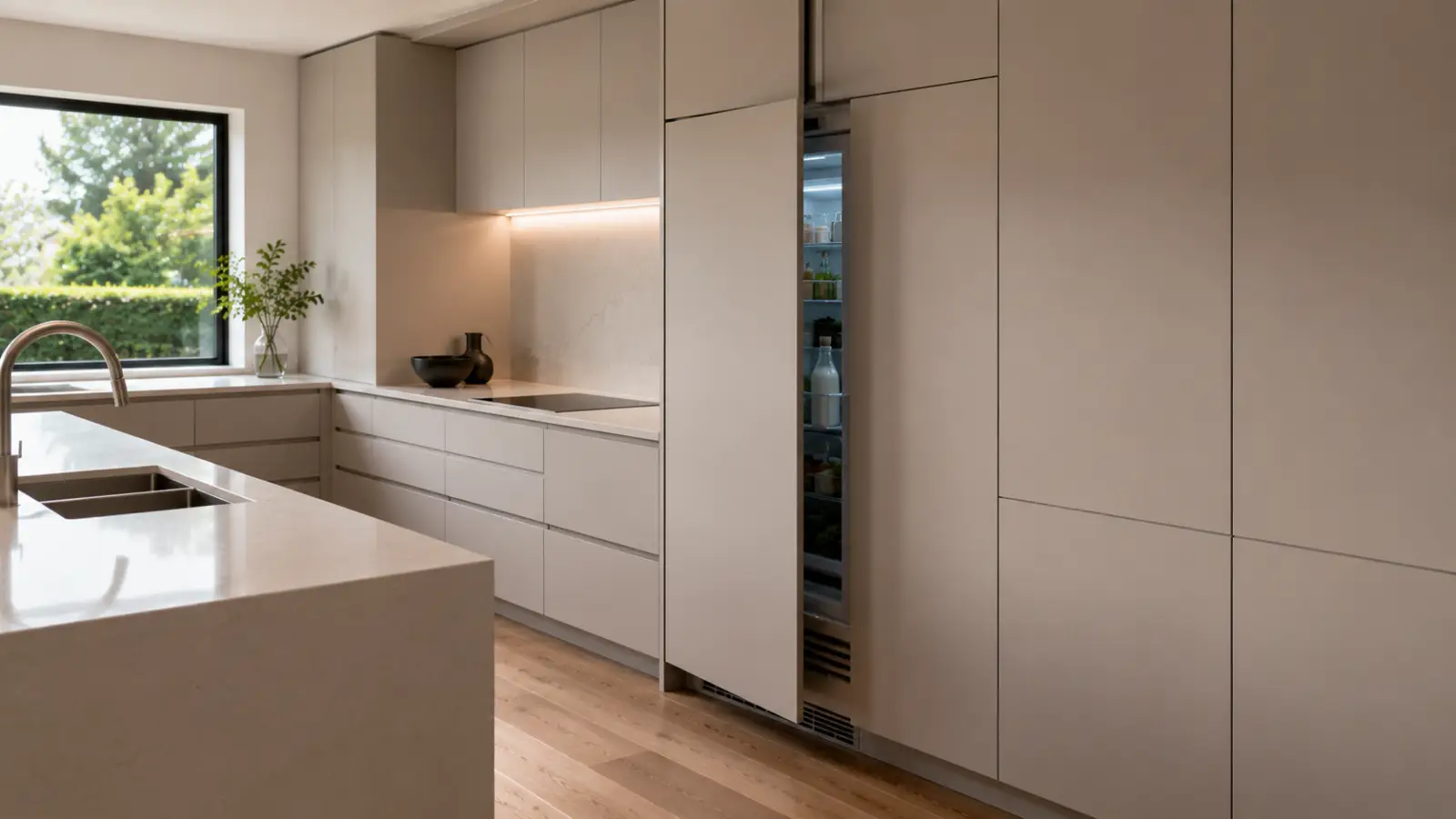
One of the first decisions we work through with most clients is how the appliances sit in the kitchen. Do you hide the fridge and dishwasher behind matching cabinet doors, or let them stand proud as freestanding units? It sounds like a small detail, but it shapes the look, the budget and how easy your kitchen is to live with for the next fifteen years.
What "integrated" actually means
An integrated appliance is built into your cabinetry and faced with a panel that matches the surrounding doors. From across the room you can't tell where the joinery ends and the fridge begins. Freestanding appliances are the opposite: they're finished in their own steel or glass front and simply slot into a gap.
The two aren't all-or-nothing. Most Gisborne kitchens we build land somewhere in the middle, integrating a couple of items and leaving the rest freestanding. The trick is knowing which is which.
The seamless look, and what it costs you
There's no denying integration looks calm and considered. A long run of cabinetry with no fridge or dishwasher interrupting it reads as one clean surface, which suits the open-plan living areas common in newer Gisborne homes.
But that look comes with trade-offs worth being honest about:
- Higher upfront cost. Integrated appliances themselves are usually dearer than their freestanding equivalents, and they need a custom door panel plus more precise cabinetry around them.
- Less choice. Not every brand or model comes in an integration-ready version, so your shortlist shrinks.
- Replacement is fiddlier. When an integrated dishwasher dies in eight years, the new one has to fit the same opening and take your existing panel, or you're up for new joinery too.
- Capacity. Integrated fridges are often smaller than the big freestanding French-door units a lot of families want.
If you love the seamless look, integrate the things you rarely replace and keep flexibility where appliances wear out fastest.
What's genuinely worth integrating
Some appliances are made for it, others fight it.
Dishwashers are the easiest win. They're a standard size, they tuck neatly under the bench, and a panelled front removes a stainless box from your sightline for a fairly modest premium. I integrate these in most kitchens without hesitation.
Fridges are the bigger conversation. A fully integrated fridge looks superb but costs noticeably more and usually holds less. If your household runs a large fridge, a good middle path is a freestanding French-door or side-by-side model set into a tall cabinet "surround" so it looks built-in without the integration price. You get the framed, finished look while keeping full capacity and easy replacement.
Rangehoods are where I'd spend the integration money. A canopy hood is a focal point whether you want it to be or not. Concealed and undermount hoods that hide inside an overhead cabinet, or slimline units behind a matching panel, keep the wall clean. In our coastal climate, strong extraction also matters for managing moisture and mould, so don't sacrifice airflow for looks. Get a unit rated for your cooktop's output.
Ovens, cooktops and microwaves are usually left as quality freestanding or built-in units in their own finish, because their steel and glass fronts already look intentional.
How this plays out in a real Gisborne kitchen
Most of the kitchens we design, build and install end up as a sensible mix: integrated dishwasher, fridge in a tall built-in surround, concealed rangehood, and a freestanding oven and cooktop on show. You get the better part of the seamless look without paying to hide everything or boxing yourself into hard-to-replace units.
A few practical things we plan for at the design stage, because they're painful to fix later:
- Ventilation gaps. Integrated fridges need breathing room top and bottom, so we size the cabinet for airflow, not just the appliance.
- Door alignment. Panelled appliances only look right when the hinges and gaps match the rest of the run. This is fussy work and it's where good cabinetry earns its keep.
- Future swaps. We note the model and opening sizes so that when something needs replacing, the next unit drops straight in.
Because we handle the design, build and install in-house here in Gisborne, we can match panels exactly and stand behind the fit with our 5-year workmanship warranty. That matters most with integration, where a millimetre out is the difference between seamless and slightly off.
So which should you choose?
If budget is your first priority, lean freestanding and spend the saving on better benchtops or a quality oven. If a clean, uninterrupted look is what you're after, integrate the dishwasher and rangehood first, then decide how far to take the fridge.
There's no wrong answer here, only the one that suits how you cook and what you want to look at every day. Have a think about which appliances you'd hate to be without if one failed, and we can plan the rest around that.

Sukhman Singh
Founder & Cabinet Maker, Flow Joinery
Sukhman designs and builds bespoke kitchens, wardrobes and cabinetry across Gisborne. Read more →
Reviews
No reviews yet — be the first to share your thoughts.
Sign in or create an account to leave a review.